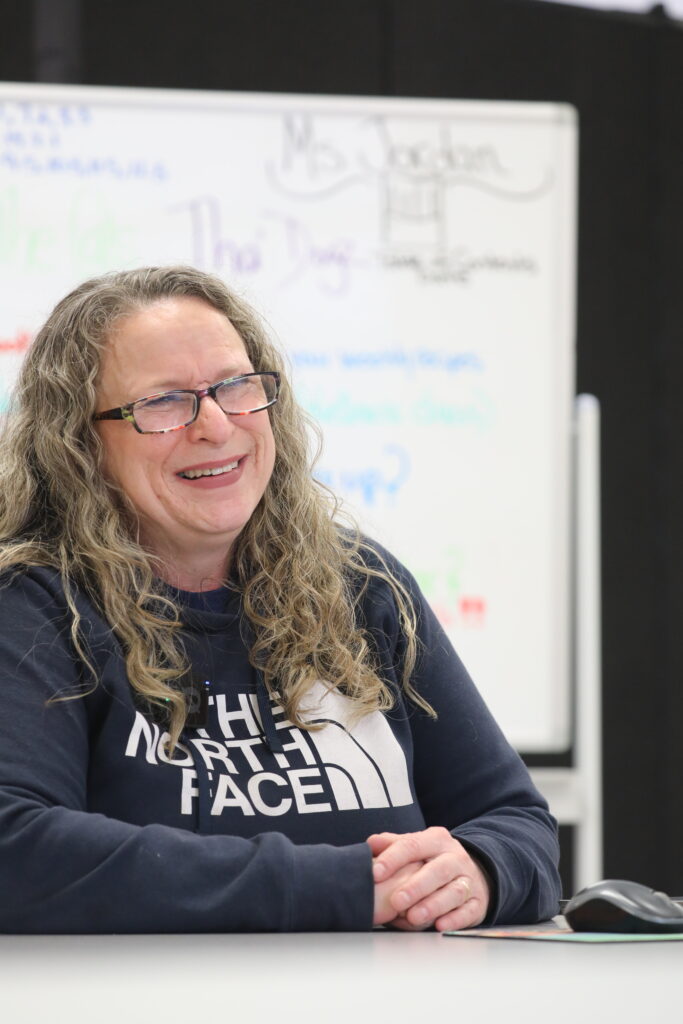
Judy Jordan wants everyone in her culinary class to leave with tangible skills and a strong sense of belonging.
Addressed affectionately by her students as “Ms. Judy,” “Ms. Jordan,” and sometimes as “Chef,” the seasoned educator has been leading Nutrition and Wellness classes at Shineforth’s Charterhouse School in Edinburg for over 11 years.
She has an incredible passion for teaching and a keen eye for identifying every child’s strengths. She nurtures her students by blending culinary arts, staple cooking and nutrition topics, and life lessons.
Judy takes a holistic approach. Through classroom lessons and Friday labs in the kitchen, she uses cooking and food preparation as a vessel for broader education, combining math, reading, and writing skills in her programming.
“The trick is to call it ‘kitchen math,’” Judy said with a chuckle. CHS students become fluent not just in reading recipes but in altering them, as well. Learning how to scale the number of expected servings up and down, Judy’s students confidently adjust measurements as needed.
“I like learning to make new recipes,” said Chase, a CHS-E Nutrition and Wellness student. “But … I really love eating the food!”

Judy isn’t just providing an excellent experience in the classroom, though. She’s equipping her students with invaluable, real-world experiences: grocery shopping, apple picking, and harvesting fresh greens from a local farm.
It’s all part of setting students up for long-term success at home and in the workplace, she said.
“I’m looking at the long plan. When they’re living on their own, they ‘ll be trying to make the rent, and they may only have $10. I want them to realize that they can go to the supermarket and spend that $10 to $14 dollars to feed themselves for a couple of meals.”
Some low-cost meals students have prepared include a variety of one-pot dishes, like pastas, stir-fries, soups, and stews.
“I love what I do, I’m telling you.”
Judy views every aspect of her programming through the lens of the Circle of Courage.
“I look at every child and see where that fits in with them, and I think that has really helped to procure these relationships that I have with my students,” she said.
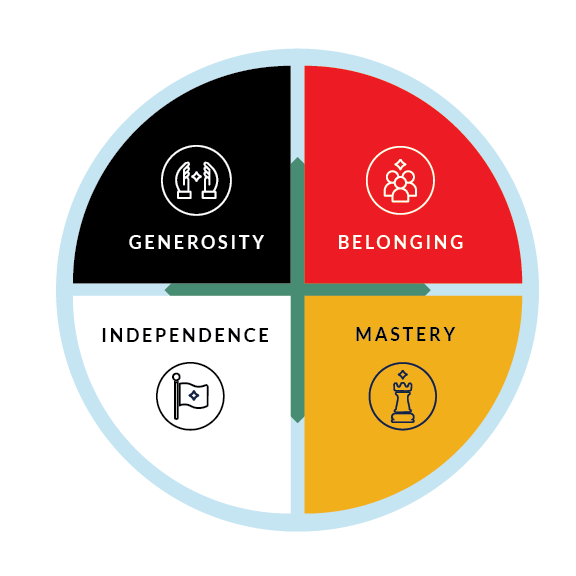
Shineforth has been embracing the Circle of Courage for years, emphasizing the importance of generosity, belonging, independence, and mastery for each child’s development. Judy says that the Circle of Courage resonated with her from the start.
“I’ve been in the culinary field since Day One,” Judy said. “At 14 years old, I hopped in the sandwich and salad area, and I’ve been in the industry my whole life.”
Prior to CHS, Judy worked in hospitality and taught adult culinary education. The Circle of Courage, she said, would have benefited her in those previous roles.
“The Circle of Courage has made me a much stronger educator and has helped me relate to the students here and others,” she said.
Now, Judy said she looks to identify potential “cracks” in the Circle of Courage among her students.
“I communicate with other teachers to let them know what I’m noticing and what we’re working on in my class,” she said.
The Circle of Courage is a beautiful thing, and it’s a system that heals and empowers.”
Chef Judy’s Favorite Family Recipe
Chef Judy’s Family Recipe | Fettuccini Alfredo
A note from Chef Judy Jordan | This Fettuccini Alfredo recipe is a family favorite that comes straight from the heart. My family is Italian, and our best recipes are passed down from our grandmothers. My grandmother, Elda, taught me this recipe. Her married name is Elda Jordan, but her maiden name is Messina, as her family hails from the Messina region of Sicily. Italians don’t write down recipes and there are no measurements. Our cooking process is always taught through demonstration and with grandmotherly precision!
WHAT YOU’LL NEED
- 2 cooking pots
- 1 set of tongs
- Fettuccini
- Large quantity of quality shredded parmesan cheese
* (shred the parmesan yourself … trust me!). You’ll need at least 1 – 1½ good handfuls.
- Approximately 4-ish tablespoons of unsalted butter, cut into pieces and softened
- A pinch of salt
DIRECTIONS
- Boil enough pasta for 2 servings in 1½ quarts of water
* Italians do not break long noodles in half to fit in the pan. Be patient, and the whole noodles will make their way into the boiling water.
- When pasta has cooked to al dente (tender yet firm), pour out most, but not all, of the pasta water into a second pot.
- Reserve the pasta water that you’ve poured into a second pot for thinning the alfredo sauce.
- Be sure that the amount of water that’s left in the pot with the noodles equals the amount of alfredo sauce that you’ll be making.
- There should be approximately ¼ of pasta water remaining in the pot with the noodles.
- Add the butter to the pasta; with tongs, lift and twirl the pasta to melt butter and coat pasta
- Add 1 good handful of parmesan cheese, lifting and twirling the pasta with the tongs. Careful not to break the long noodles while twirling the pasta.
- Add some of your reserved starchy pasta water to thin out the sauce and more of your remaining shredded cheese to thicken teh sauce until you’ve created a perfectly creamy and balanced Alfredo Sauce.
- Finish with a pinch of salt and enjoy!
“This Fettuccini Alfredo recipe is a family favorite that comes straight from the heart. My family is Italian, and our best recipes are passed down from our grandmothers.
My grandmother, Elda, taught me this recipe. Her married name is Elda Jordan, but her maiden name is Messina —her family hails from the Messina region of Sicily.
Italians don’t write down recipes and there are no measurements. Our cooking process is always taught through demonstration and with grandmotherly precision!”
Independence
When it comes to lesson planning, Ms. Jordan’s students are in the driver’s seat. At the beginning of the year, the Charterhouse School chef looks to the students and asks, “What skills do you want to learn? What do you want to make this year?”
The students flip through recipe books and, together, they come up with a list. Throughout the year, one by one, they turn their cooking dreams into reality.
Friday labs are something everyone looks forward to. “I like lab day in Culinary Arts because I learn how to make food and then I can go home and try making it for my folks,” said Alex, one of the young chefs.
One of the dishes that the up-and-coming chefs chose to prepare this year was orange chicken. The students studied 3-stage breading and sauce-making, learned the correct way to cook rice, and practiced their food-safety and food-handling skills.
During another Friday lab, the class made broccoli brownies. The students fortified the brownies with pureed broccoli, and — maybe surprisingly — the feedback was overwhelmingly positive. Charterhouse School staff look forward to Fridays after lab, when they get to sample the students’ culinary creations. This time, they were shocked to learn that the delicious brownies were hiding loads of nutritious value.
Mastery
The young chefs work on knife-cutting skills continuously throughout the year. With 8-inch hard plastic training knives, the class learns how to correctly hold a knife and do dice cuts in varying sizes, French fry cuts, and julienne cuts. “They’re excelling on that,” said Judy, “and they’re really proud when they’re getting it.”
Other practical skills, such as calibrating a thermometer, can come in handy at home, too. After class, students went home excited to check their families’ thermometers, ensuring that they were correctly calibrated.
Mastering skills such as these empower students to be the chefs of their own kitchens. Judy starts class with “Food Talk,” a time for students to share what they made at home or at their jobs using skills learned in the class.
“I like Culinary Arts … even though it is challenging sometimes … it has taught me how to make food on my own,” said CHS senior Brynlee. “I am graduating this year and will be moving into my own apartment with my sister, and I will use the cooking knowledge I have learned from Mrs. Jordan.”
Belonging
Judy meets students where they are. Every student has a place in her kitchen. “They show up because they do belong, and there is always something for them to do to keep this machine running,” Judy said.
In addition to plastic training knives, students sometimes use small paring knives. Chef Jordan always checks in with students about safety first, asking, “Do you feel safe with a knife today?” If the answer is no, she ensures that the student still feels valued. “That’s OK because I need you to help us gather and prep the ingredients,” she’ll say.
Whatever the task may be, every student has a place in the kitchen, and they belong.
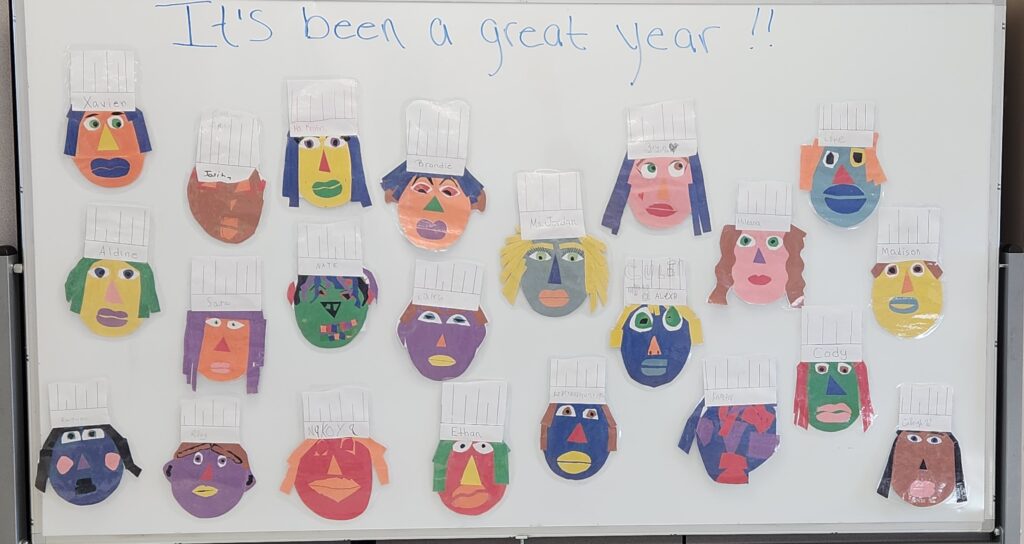
to the table, and all who walk into her classroom are invited to pull up a chair.
Generosity
Students embrace cooking for others in Ms. Jordan’s class. Recently, one student made and delivered chicken and vegetable soup to a staff member who was feeling under the weather.
In November, CHS-E students hosted a luncheon for Specialized Education School Week. Students created and executed the menu, set up and decorated the dining area with tablecloths and accents on each table, and engaged with our Local Education Agency (LEA) guests. From cutting and pureeing everything for a delicious tomato basil soup to preparing a hearty chopped salad and decadent dessert, these students pulled out all the stops to show off their culinary skills.
“They did it all themselves,” Judy said with a smile.
When reflecting on the art of cooking, Judy emphasized that at the heart of it, it’s all about generosity. “It’s helping others out and being responsible,” she said.
A Lasting Impact
Judy sees food as “a beautiful foundation for friendship, learning, and dropping your walls.” In her class, she emphasizes these values while teaching young people how to eat healthy, work as a team, and live independently.
Her students mean everything to her, and nothing feels quite as nice as seeing them succeed.
Many of her former students have followed in her footsteps and started a career in hospitality and food services. Others use the transferrable skills they learned in class at home, in their communities, and in other professions.
No matter where they go or what they do, each of them knows that they’ve got someone in their corner who believes in them so deeply that they can’t help but believe in themselves, and that person is Judy Jordan.
“The Circle of Courage has made me a much stronger educator and has helped me relate to the students here and others.”
The Circle of Courage
“A System that Heals and Empowers”
The Circle of Courage promotes positive youth development based on the principal that there are four universal growth needs important to a child’s development: Generosity, Belonging, Independence, and Mastery.
The model is utilized across Shineforth. It’s the basis for our phase treatment system at the Child & Family Healing Center and is embraced by CHS staff as a grounding educational philosophy. Chef Jordan speaks to the benefit of using the Circle of Courage as a guide for educators. Each of the four universal growth needs plays an integral role in her programming.